Recycling and Sustainability at Gardening Addiscombe
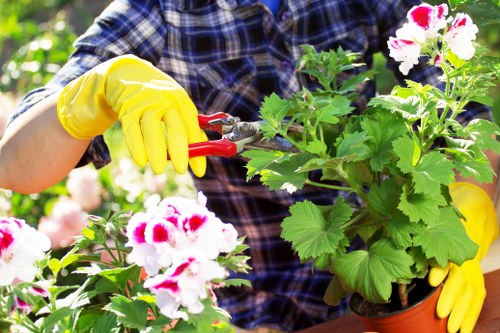
Gardening Addiscombe is committed to creating an eco-friendly waste disposal area and a robust, sustainable rubbish gardening area that supports local green space, reduces landfill and encourages circular resource use. Our approach blends practical site operations with community partnerships, ensuring that garden waste and household recyclables are redirected from landfill into productive reuse, composting and recycling streams.We design every clearance and garden maintenance project with sustainability front of mind. This means prioritising on-site composting and soil recovery, using segregated bins to capture green waste separately from general refuse, and deploying low-impact practices for transport and material handling. The result is a cleaner, healthier local environment and happier neighbours who value Addiscombe sustainable gardening.
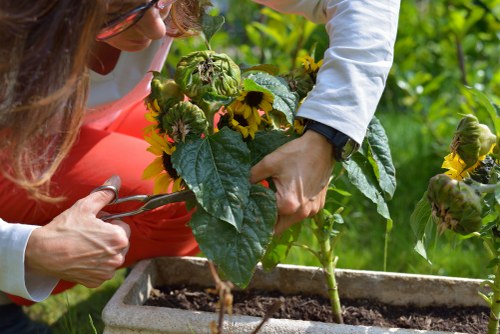 The wider borough's approach to waste separation informs our operations: kerbside schemes that collect food waste, garden waste, paper and card, glass and mixed containers make it possible to keep a high proportion of materials out of the residual stream. We work with nearby household waste recycling centres and local transfer stations so materials collected during our jobs can be processed efficiently. Key recycling activities include:
- Source-separated green waste for composting and mulching
- Dry recycling sorting for paper, plastics and glass
- Careful segregation of soil, concrete and inert materials for reuse or appropriate disposal
Our Recycling Percentage Target and Reporting
Gardening Addiscombe has set a clear recycling percentage target to measure progress and drive continuous improvement. Our immediate target is to achieve a 65% recycling and reuse rate across all site-generated waste within two years, moving toward 75% as operations scale. We monitor this by recording weights at transfer points, tracking incoming and outgoing loads, and reporting tonnage diverted from landfill to organic treatment, reuse channels or recycling facilities.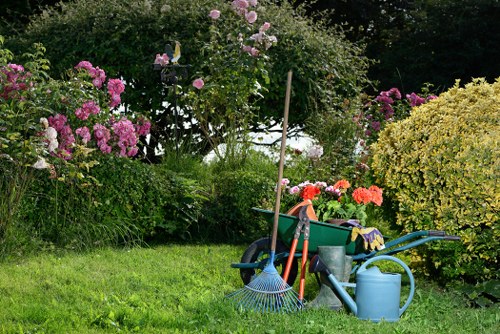 To reach and exceed these targets we invest in staff training, site infrastructure and partnerships. We use colour-coded containers and provide job-site briefings so crews consistently separate green material, timber for reuse, and recyclables. When composting on-site isn’t feasible, green waste is taken to municipal composting facilities or local transfer stations that specialise in organic processing.
Partnerships with Charities and Community Groups
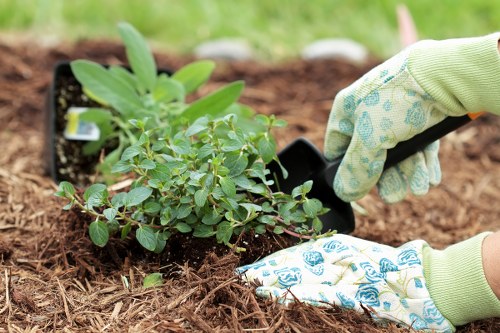
We believe a sustainable rubbish gardening area is also a social resource. Gardening Addiscombe partners with local charities and social enterprises to maximise reuse: surplus plants and pots are donated to community gardens, usable soil and turf go to local allotments, and recovered timber or garden furniture is offered to charity reuse schemes. These partnerships reduce waste, extend material life-cycles and support local causes.Operational changes we champion include prioritising reuse before recycling and recycling before disposal. For example, healthy plants removed during a clearance are assessed for transplantation; pots and planters in good condition are cleaned and redistributed; and wood is checked for reuse as raised beds or paths. When materials cannot be reused, they are routed through the borough’s established recycling streams to maximise diversion rates.
 Transport is a critical part of a low-carbon waste strategy. Gardening Addiscombe has invested in a fleet of low-emission vehicles including electric vans and Euro 6-compliant small trucks. Route optimisation software minimises mileage and consolidates loads, reducing both fuel use and traffic impact in Addiscombe neighbourhoods. We also trial cargo bikes and shared vehicle platforms for small jobs where appropriate, further shrinking our carbon footprint.
 Local transfer stations play a central role in our logistics: materials collected from jobs are taken either to the borough transfer facility or to authorised household recycling centres where they are sorted for composting, material recovery or energy-from-waste when no other option exists. We ensure all loads are accompanied by clear documentation so that weights and destinations are traceable, supporting our recycling percentage target and providing transparency to partners and residents.
Our commitments include:
- Targeted diversion: Reach and maintain 65%+ recycling and reuse within two years.
- Charity partnerships: Redirect reusable plants, timber and equipment to community groups and social enterprises.
- Low-carbon logistics: Use electric and low-emission vans, route planning and cargo-bike options.
We also encourage community engagement in sustainability without prescribing guides: residents can help by keeping green waste free of contaminants, separating recyclables at source, and supporting local reuse hubs. This cooperative approach increases the efficiency of the borough’s waste separation systems and improves outcomes for everyone.
Gardening Addiscombe’s blend of practical on-site practices, collaboration with transfer stations and charities, and investment in low-carbon vans demonstrates how an eco-friendly waste disposal area and a vibrant sustainable rubbish gardening area can coexist. By focusing on measured targets, traceable logistics and meaningful partnerships, we turn waste into resource and help build a greener, more resilient Addiscombe.